



Top Executive Interviews "SOU"
- Code:186A
- Sector:Services
- Listing Date:Jun. 05, 2024
Seizing Every Turning Point: The Power of Learning Shapes a Path Forward
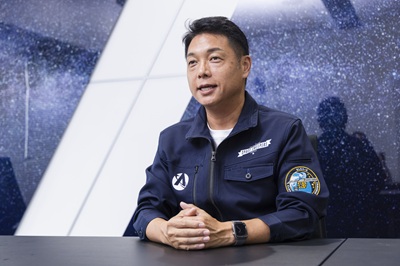
The cosmos is something we gaze upon and romanticize. Although advances in science and technology have brought space closer than ever before, for most people, it still never intersects with their daily lives. Although it may be hard to believe it, space is more cluttered with debris than any ordinary road or highway on Earth. This is the reality of the 21st century.
The cosmos has layers, and beyond the lunar sphere lies uncharted territory. But just before that, in Earth's orbit, a multitude of satellites crisscross. Those satellites leave behind a quantity of space debris far exceeding the number of operational satellites. The debris consists of defunct satellites, fragments from exploded rockets, and remnants of weapons testing. Imagine a highway where wreckage from accidents, cars that ran out of gas, and litter discarded by people remain untouched and persist indefinitely. This is what is happening in orbit.
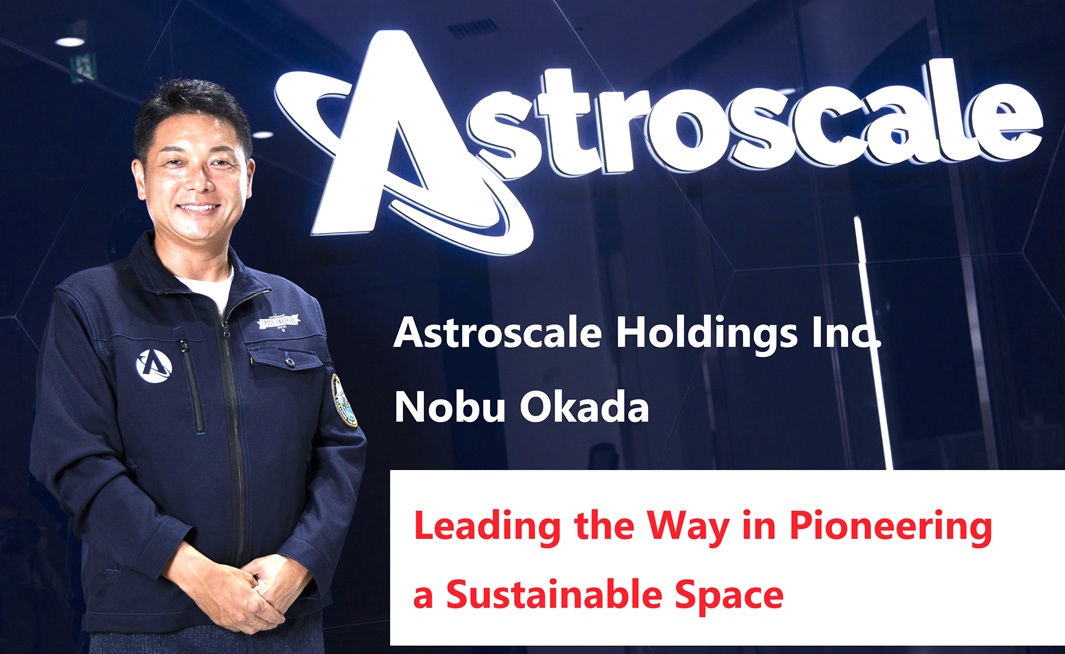
A Japanese venture has been quick to step forward in developing technology to remove this space debris. This company is Astroscale Holdings, founded by Nobu Okada.
Nobu, a native of Hyogo prefecture, experienced two major turning points in his life before he entered the workforce.
“The first of these turning points was joining the NASA Space Camp junior program when I was a freshman in high school. There I met and was inspired by astronaut Mamoru Mori. After receiving a handwritten letter from Mamoru, I felt a new passion for my studies.”
Nobu, who had always been interested in environmental issues, studied forest zoology in college. He vaguely imagined he would pursue an academic career. However, the second turning point came suddenly in January of his senior year. This was the Great Hanshin Earthquake, which devastated the region where he was born and raised.
“That day, I rushed over from Tokyo with food and water. The loss of people and property was immense, and I knew I had to find work immediately. After the Great Earthquake, I received assistance through government programs. After graduating, I enrolled in graduate school while buying over 60 books to study, preparing for the national civil service exam the following spring. ”
His ability to learn proved valuable here as well, and he began his career at the Budget Bureau of the Ministry of Finance. However, while studying abroad on a government scholarship at a U.S. graduate school, he witnessed firsthand the dynamism of the dot-com boom, which had a profound impact on him. This led to yet another turning point.
A Fresh Start: Space is Where You Will Make Your Mark
His conviction that private companies are the ones that can truly transform society grew stronger, leading him to repay his study abroad expenses and resign. Nobu considered starting his own business but changed his mind, joining McKinsey & Company instead. After that, he served as the CFO of a venture company and also founded his own businesses, all of which were software companies.
“During the dot-com boom, I aspired to conquer the world with software. But when I actually tried it, I realized I couldn't succeed globally with software alone. I thought developing new hardware and combining it with software might open a path. While searching for that solution, I suddenly returned to the world of Mamoru Mori, whom I’d met at age 15. By then, I was nearly 40. During that period, as I struggled through my first midlife crisis, Mr. Mori’s message came back to me: “Space is where you will make your mark.”
Again, the power of learning shaped the path forward.
“I attended space-related conferences to explore what was trending and inevitably arrived at the space debris problem. By April 2013, I learned that space was already littered with debris, that orbits would become unusable if this continued, and that despite the clear challenge, no one had a solution. I felt this was truly worthwhile. A week later, I launched Astroscale PTE. LTD. in Singapore, and my personal crisis was resolved. ”
Still, at that point, as the head of a software company, Nobu was a complete outsider to the space industry, and no engineer stepped forward to co-develop this unseen technology. He dedicated himself to reading hundreds of papers from academic conferences and learning from them. Through this process, he finally developed a hypothesis. Armed with it, he visited the authors of those papers and traveled the world. Though met with initial skepticism, numerous researchers took the time for lengthy discussions and even gave him tours of their laboratories.
“It was a tremendous learning experience, and by my third world tour, those who had been involved began to believe this might actually be possible. That was September 2014. Within six months, we decided to secure funding, build a team, and establish a factory. ”
This passion and commitment are reflected in the name of the company.
“Our company champions the vision of “the secure and sustainable development of space for the benefit of future generations.” While there are multiple words representing space, we chose “astro,” the oldest term derived from Greek, which signifies balance. We believe achieving sustainability in space requires balancing development with environmental conservation. Thus, we resolved to become a company responsible for maintaining this balance. ”
Our Mission: Provide Trusted and Value-Driven On-Orbit Servicing Solutions
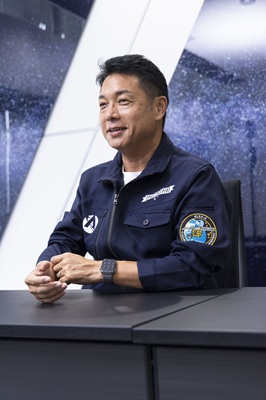
This is how the world's first private company dedicated to developing space debris removal services was formally established and successfully demonstrated its technology in space through two projects. The ultimate goal is to pass on a sustainable trajectory to the next generation,
The company's efforts extend beyond merely removing space debris. Utilizing its proprietary RPO (Rendezvous and Proximity Operations) technology to handle non-cooperative objects, it also performs on-orbit refueling of operational satellites and conducts observation and inspection of malfunctioning satellites and other objects.
“In short, the space industry has long embraced a culture of disposability. It was a world where the prefix “re-” didn’t exist. In other words, no repair, no recycling, no refueling, no removal. For example, no one buys a new car, discards it when the gas runs out, and buys another. Cars, aircraft, and computers all have established value chains. They're manufactured and sold, then consumers use them, followed by maintenance and repairs, and finally disposal or reuse. But the downstream part of this chain was completely absent in the space industry. Everyone recognized the opportunity was there, yet no one could seize it because RPO technology didn't exist. ”
Astroscale pioneered this RPO technology and now provides a wide range of on-orbit services beyond debris removal. These include life extension, refueling, observation, and inspection. Founded to address the space debris problem, it has steadily expanded its service offerings.
The research that began with Nobu alone bore fruit through interactions with various individuals, including the aforementioned researchers. He also reunited with Mamoru Mori after founding the company.
“If I had to name another key person, it would be someone from SpaceX (the American private space company). At a conference in Germany, when I mentioned creating a company to clean up space debris, many experts (though kindly) dismissed the idea, saying “there's no market, no technology, and it's not something a private company, let alone a startup, should do.” The only person who emailed me saying “you should do it” was that person from SpaceX. Then, just three days after founding the company, I was invited to SpaceX and given a full factory tour. They told me that innovation can't happen without owning your own factory, and that insight became the cornerstone that defined our company's direction. ”
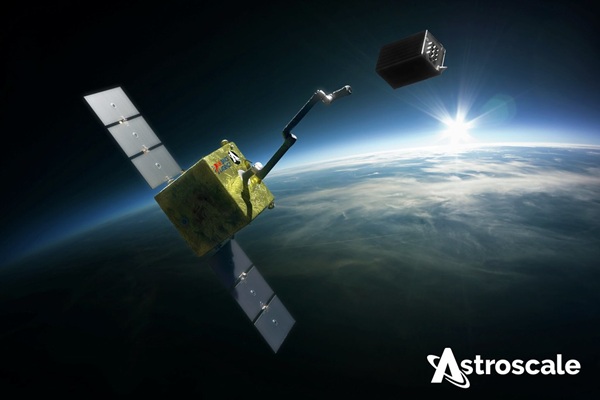
Commitment to Innovation: Moving Swiftly to Tackle the Challenges of Space
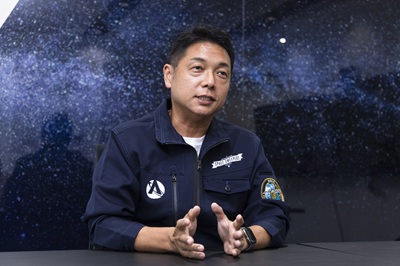
Today, Astroscale has grown into a global technology company with over 600 employees and factories equipped to manufacture satellites. At its founding, Japan had few engineers specializing in space technology outside of JAXA (Japan Aerospace Exploration Agency), large corporations, research institutes, graduate schools, and a handful of component manufacturers. With few looking toward a startup, they began hiring experienced professionals nearing retirement from major companies involved in JAXA missions, as well as individuals from graduate schools and research institutes who felt research alone was not enough.
“Initially, our engineers were only in their 20s and 60s, but now we've been able to recruit diverse talent across age, nationality, and background. RPO technology for non-cooperative objects is truly complex, requiring a synthesis of various technologies. It spans multiple domains, including sensor technology for detecting debris and algorithms for analyzing data. Knowledge and technology from the field of aerospace engineering are certainly necessary, but they are only a small part of the whole. Even as a diverse group of engineers, working together naturally fosters interdisciplinary learning and knowledge sharing. ”
This is why Nobu believes teamwork is key.
“Moreover, it's the sheer passion we share for the same vision. Everyone is deeply committed to our vision: “The secure and sustainable development of space for the benefit of future generations.” Recently, our company has been featured in various international media outlets, and I believe this has also become a source of power for our employees. ”
I asked what Nobu considers important in management.
“All of our core technologies are developed in-house. While part of the reason is that no other company possesses them, we believe it's crucial to constantly challenge ourselves as pioneers and see things through to completion. Following others is easier, but the deterioration of the space environment is progressing every moment, so time is simply too precious. On top of that, we have quickly established multiple global bases. We currently have offices and R&D centers in five countries, establishing systems capable of locally handling everything from design to development. While a typical startup might move on to another country after achieving success in one country, that approach won't win globally. Establishing multiple global bases is the most capital-intensive model, but we believe it yields higher returns. This strategy is already beginning to bear fruit. ”
Nobu also considers valuing stakeholders to be an important management issue.
“We value all of our stakeholders. Our company really does receive support from a wide range of people: the government, space agencies, shareholders, investors, partners, customers, suppliers, the media, and even the general public. To ensure these individuals understand our company accurately and continue supporting us, we consistently strive to maintain careful communication. ”
Listing on TSE to Secure Capital and Liquidity
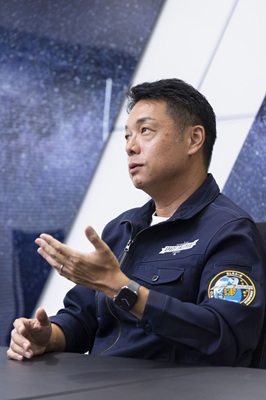
Astroscale Holdings listed on Tokyo Stock Exchange’s Growth Market in 2024. While relatively recent, the nature of the company's business required significant funding before it could generate revenue. Among multiple funding options, the company chose to go public.
“We raised capital seven times prior to going public. While we proceeded in stages, the decision to ultimately pursue an IPO stemmed from demand from so-called public equity investors (those who invest in publicly traded stocks), even though we had the option to choose private or public bonds. ”
Astroscale Holdings was founded in Singapore. Five years later, it relocated its headquarters registration and office to Japan. We asked about the reason behind this move and whether listing on other overseas markets was ever considered.
“When considering listing on Tokyo Stock Exchange, we realized it would be difficult to list while maintaining our headquarters in Singapore. We also considered listing on other overseas markets, but our top priority was ensuring sufficient liquidity while enabling flexible fundraising. The market options narrowed significantly when focusing on those that could deliver both fundraising and liquidity. Considering our company's scale, listing on Tokyo Stock Exchange seemed the best choice. Of course, my Japanese nationality played a significant role. However, I also had concerns that if we listed on the New York Stock Exchange, we might get buried among other stocks and become difficult for investors to discover. Tokyo Stock Exchange allows us to attract overseas investors as well. ”
Looking back, the process of listing on TSE was also fraught with difficulties.
“The biggest challengee was that, while space-related companies are gradually gaining acceptance now, back then, when meeting investors, we had to start by explaining orbital mechanics. It was difficult to get them to properly understand our business and growth potential within the limited time available. The same applied to individual investors. We struggled to explain simply and clearly why the business opportunity existed here and gain their understanding. Incorporating this into the prospectus in a way accessible to general investors without specialized knowledge was no easy task.However, I believe we learned an immense amount during the listing review process. Even when I thought I was answering questions, there were likely many instances where my explanations fell short. ”
After going public, Astroscale’s investor base has completely changed, and the questions and expectations raised during regular investor meetings and shareholder meetings have become a source of motivation. Nobu also feels that the increase in job applications during recruitment is likely driven by its listing.
“We have always made a point of carefully explaining matters to our stakeholders even before going public, so our approach to stakeholder communication hasn't changed much. Still, I believe going public has brought many benefits, both tangible and intangible. ”
Within Ten Years, Orbital Services Will Become Infrastructure
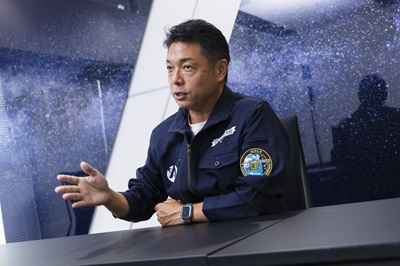
The landscape surrounding the space market is changing dramatically every few years. We asked Nobu about Astroscale’s future outlook.
“Until a few years ago, there was no awareness of on-orbit services, and the market itself didn't exist. But now, our backlog is growing, and the world has changed. Through our two projects, “ELSA-d” and “ADRAS-J,” we have demonstrated RPO technology for non-cooperative objects. RPO technology is the fundamental capability needed to approach and provide solutions for anything hurtling around Earth at tremendous speeds. ”
“Now, every time we launch a satellite, we get media coverage. But if roadside assistance were dispatched on a highway on Earth, the media probably wouldn't care. We want orbital services to reach the same level of acceptance as this automotive roadside assistance by 2030. We aim to create an era within the next five years where orbital services are taken for granted. In the five years after that, we want to make orbital services infrastructure, creating a world where every satellite operator designs with this capability as a given. ”
In cosmic terms, five to ten years is like tomorrow. Yet, Nobu remains vigilant, knowing that unless swift action is taken, the space debris problem will worsen beyond repair.
When asked what advice he would give to entrepreneurs aiming to go public, Nobu shared the following insights:
“If you aim to grow your company, I want you to clearly envision a future where everyone can be happy. I hope that if many startups can accelerate their missions using the funds raised through IPOs, Japan will be filled with positive news. Our company is still in its early stages, so we're focused solely on moving forward at full speed. ”
Incidentally, on the very day I spoke with Nobu, a group of elementary school students visited the company for an educational tour. Considering that meeting Mamoru Mori during his high school years was the starting point for Nobu, I hope that among these children visiting today, more pioneers like Nobu Okada will emerge. May they create a future overflowing with bright news, both in Japan and around the world.
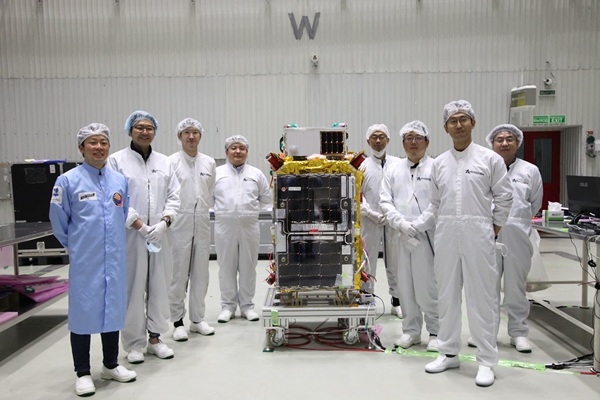
Profile
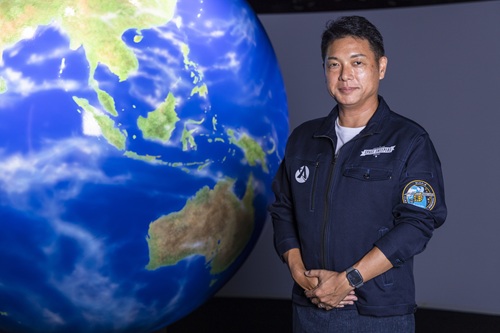
Founder and CEO
- 1973
- Born in Hyogo Prefecture
- 1997
- Joined the Ministry of Finance
- 2001
- Joined McKinsey & Company
- 2004
- Appointed Director, Turbo Linux Inc.
- 2012
- Founded MIKAWAYA21 Inc., Appointed Director
- 2013
- Founded Astroscale PTE. LTD. and assumed position as CEO
- 2015
- Assumed position as Representative Director of Astroscale Inc.
- 2018
- Assumed position as Representative Director and CEO of Astroscale Holdings Inc.
- 2024
- Listed shares on the Tokyo Stock Exchange Growth Market
Company

- Code:186A
- Sector:Services
- Listing Date:Jun. 05, 2024