



TSE Asia Startup Hub
Korea Development Bank
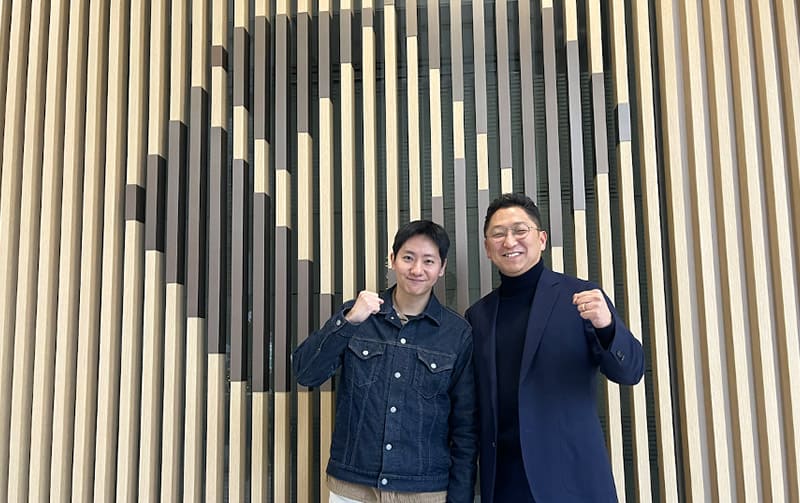
From left: Sang Hyeon Baek, Assistant Manager, KDB NextRound Dept. ; Kyuhwan Rah, Senior Manager, KDB NextRound Dept. Photo credit: Growthstock Pulse
Beyond Investment: How Korea Development Bank Nurtures Startup Ecosystem
South Korea's startup ecosystem has achieved remarkable growth over the past decade. Playing a crucial role in supporting that growth is the Korea Development Bank (KDB)1. Since its establishment in 1954, the bank—fully owned by the Korean government—has been deeply involved in nurturing the nation's core industries as a policy financial institution. KDB began full-scale venture investment in the 1990s and has since become one of Korea's largest venture support organizations.
What distinguishes KDB is that it goes beyond being a mere investment institution. Rather than simply providing capital, it takes a comprehensive approach to nurturing the entire venture ecosystem—operating platforms that connect startups with investors, hosting large-scale startup events, and providing acceleration programs. At the heart of this effort is the KDB NextRound2 Department.
We spoke with Kyuhwan Rah, Senior Manager of the NextRound team, and Sang Hyeon Baek, Assistant Manager, about the current state of Korea's venture ecosystem, the roles of the department's three teams, and KDB's expanding global reach.
Korea's Leading Venture Support Organization
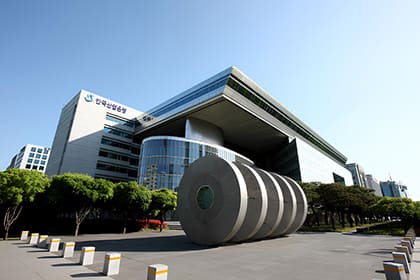
Korea Development Bank (KDB) headquarters in Yeouido, Seoul Photo credit: Korea Development Bank
KDB began full-scale venture investment in 1998 and has since invested directly in 1,400 startups. Making approximately 100 new investments each year, it stands as Korea's largest direct investment institution, providing hands-on support for the growth of promising companies.
"KDB began direct investment in 1994, and to date has invested in 1,400 startups. KDB makes new investments in approximately 100 companies each year.” (Rah)
KDB's influence extends well beyond direct investment. In the indirect investment sector—investing in VC funds—the bank has made its presence equally felt. Since beginning indirect investment in 2010, it has invested cumulatively in over 375 funds, currently maintaining participation in 290 funds with a total value of 54 trillion won (approximately $36 billion USD). The bank continues to invest 1.6 trillion won (approximately $1.1 billion USD) in new funds annually. In the indirect investment scale, KDB ranks second only to the National Pension Service of Korea, and together with its direct investment activities, it plays a central role in facilitating capital circulation throughout the ecosystem.
KDB's investment focus is guided by the 12 National Strategic Technologies designated by the Korean government—semiconductors and displays, secondary batteries, advanced mobility, next-generation nuclear power, advanced bio, aerospace and marine, hydrogen, cybersecurity, artificial intelligence, next-generation communications, advanced robotics and manufacturing, and quantum technology. These represent the core fields that determine Korea's economic competitiveness, and KDB pursues a policy-driven approach of concentrated investment in each of them.
"KDB particularly focused on deep tech sectors—semiconductors, mobility, aerospace, and biotechnology. These are core industries driving Korea's economic growth.” (Rah)
In 2025, KDB also launched the new National Growth Fund, comprising 75 trillion won (approximately $51 billion USD) from the government's Advanced Strategic Industry Fund and an equal 75 trillion won (approximately $51 billion USD) from the private, public, and financial sectors. Through this fund, KDB's influence across the ecosystem continues to expand.
Three-Pillar Support Structure
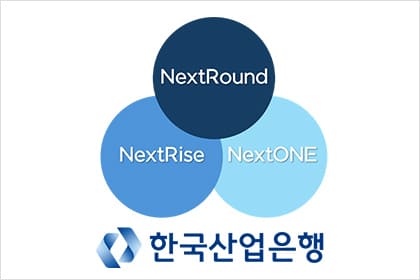
Image credit: Korea Development Bank
The KDB NextRound Department is composed of three teams, each providing multifaceted support tailored to different startup growth stages.
The first is the KDB NextONE team (ONE stands for Opportunity for New Entrepreneurs), which operates an acceleration program targeting early-stage startups. Unlike private accelerators, KDB NextONE accepts startups from a wide range of sectors important to the overall Korean economy, without bias toward specific industries. Financial support includes fundraising opportunities through the KDB NextRound platform and direct investment from KDB, while non-financial support encompasses expert consulting and corporate diagnostics, business collaboration opportunities with major companies, and global market entry programs that leverage KDB's international network.
The second is the NextRise team, which hosts KDB NextRise—Korea's largest startup fair, held every June. Hundreds of startups gather alongside investors, corporations, and the general public, with a diverse lineup of programs including exhibition booths, pitch sessions, networking events, and panel discussions. For startups, it is an outstanding opportunity to showcase themselves; for investors, a venue for discovering promising companies; and for major corporations, a chance to find partners for open innovation. The event serves as an annual embodiment of ecosystem-wide activation.
"KDB NextRise is an event like Korea's version of SusHi Tech Tokyo. KDB holds a large-scale startup festival once a year.” (Rah)
The third is KDB NextRound, which operates an IR platform. Launched in 2016, it holds pitch events three times a week—every Tuesday, Wednesday, and Friday—functioning as a "place" that connects startups and investors on a daily basis. While NextONE nurtures early-stage startups and NextRise provides a grand stage once a year, NextRound creates opportunities for connection on a continuous basis. These three teams complement each other, forming a comprehensive support structure for startups at every stage of growth.
"Our (NextRound) team specializes in nurturing the venture ecosystem. We're not just about investment—we provide a place to connect startups and investors, working to activate the entire ecosystem.” (Rah)
How KDB NextRound Creates "Connections"
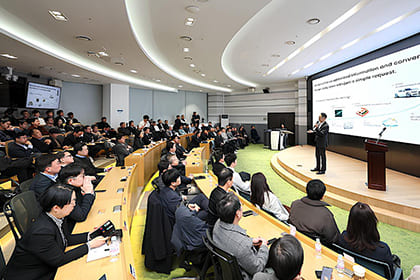
KDB regularly holds NextRound pitch events at its Yeouido headquarters in Seoul. This photo shows the Opening Day, the first event of 2025, held in February. Photo credit: Korea Development Bank
"Jump up through connectivity—this is our platform's philosophy. The keyword is 'connections.’” (Rah)
KDB NextRound operates through a distinctive model. It partners with over 130 companies—VCs, CVCs (Corporate Venture Capital), accelerators, financial institutions, and more—with each session hosted by one of these partners. The host recommends 3 to 5 companies from its portfolio, ensuring that a different partner and a different set of startups take the stage each time.
"Each session is hosted by a partner company, and they recommend 3–5 companies from their portfolio. In other words, different partners appear each time, and different startups pitch.” (Rah)
This mechanism achieves both diversity and commitment simultaneously. Having a different partner host each session naturally brings startups from a wide range of industries and stages to the stage, while the act of hosting itself motivates partner companies to recommend high-quality startups. The NextRound team itself consists of just four people, yet through partner cooperation, 80 to 100 sessions are held annually, giving 300 to 500 startups per year the opportunity to pitch—a scale unmatched anywhere else in Korea.
"Our team is just four people. We can run this many events only because of cooperation with partner companies.” (Baek)
Sessions are open to anyone—even non-investors can attend—and all sessions are livestreamed on YouTube. This openness reflects a core belief that creating meaningful connections requires keeping doors wide open and welcoming diverse participants. With companies ranging from early-stage startups to late-stage firms with established revenue taking the stage, the platform serves investors of varying focus efficiently. The ability to encounter companies at every stage of growth in a single platform is a compelling draw for both domestic and international investors alike.
Unique Characteristics as a Government Institution
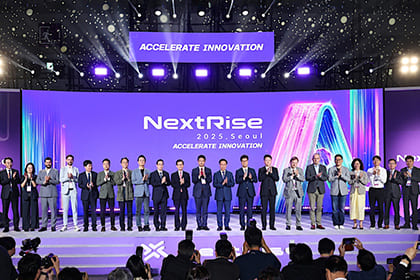
KDB NextRise, an annual event themed on open innovation, held at COEX in Seoul in June 2025. Photo credit: Korea Development Bank
KDB's role in Korea's venture ecosystem is inseparable from its identity as a government institution.
"As a government institution, we support companies important to the overall Korean economy without bias toward specific industries. This is a major difference from private VCs.” (Baek)
In contrast to private VCs, which concentrate on specific sectors based on their own investment theses, KDB invests across a broad range of sectors—including deep tech fields with lengthy R&D periods and high commercialization risks—guided by long-term policy objectives. The ability to support companies in fields like semiconductors, biotechnology, and aerospace, where the journey from R&D to commercialization can take more than a decade, on a timeline that private VCs find difficult to commit to, is a strength unique to KDB. This willingness to prioritize the development of entire industries over short-term returns underpins Korea's deep tech ecosystem.
KDB's government backing also enhances its credibility within the ecosystem, attracting diverse participants—including major corporate venture capital arms and international investors—to NextRound events. Many private VCs view KDB not as a competitor but as a collaborative investment partner: KDB's participation as a lead investor reduces risk for others, making co-investment a frequent occurrence. This public-private partnership approach forms a structural strength that supports the continued growth of Korea's venture ecosystem.
Global Expansion: Korea-Japan Collaboration at the Frontier
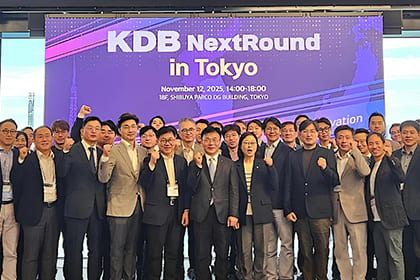
On November 12, 2025, Korea Development Bank held KDB NextRound in Tokyo 2025 in Tokyo. KDB Chairman Sang-jin Park stands in the center. Photo credit: Korea Development Bank
For Korean startups, the limitations of the domestic market have always been a challenge. Since the COVID-19 pandemic, three converging factors—the psychological shortening of distance through the spread of remote work, the maturation of the domestic market, and the activation of global fundraising—have rapidly intensified enthusiasm for overseas expansion.
"Since COVID, particularly in the past 2–3 years, interest in overseas markets has clearly increased.” (Rah)
In response to this trend, KDB NextRound has expanded its activities globally since 2018 through "Global Rounds"—NextRound events held in major international startup hubs. Hosted in cities including Shenzhen and Shanghai (China), Jakarta (Indonesia), Singapore, Silicon Valley (U.S.), and Tokyo (Japan), each event follows a two-day format: on the first day, Korean VC delegations visit local ecosystem organizations to deepen their understanding of the market, while the second day centers on IR pitch presentations from startups of both countries to investors from both regions. These events serve as a direct bridge between Korea's startup ecosystem and global venture ecosystems, offering participating startups the opportunity to connect with international investors and corporations.
Japan occupies a particularly important position within KDB's global expansion strategy. Geographic and cultural proximity, combined with the country's large market size, make it an attractive target—though language barriers, differences in business customs, and regulatory complexity also pose real obstacles to entry. KDB maintains an office in Tokyo and actively works to build networks with Japanese companies. In 2024, KDB became a partner of the TSE Asia Startup Hub, and through the Tokyo event, initiated collaboration aimed at supporting Korean startups' expansion into the Japanese market and potential future listings. The event produced tangible results, with several startups successfully raising funding and some Korean VCs establishing Japan-focused investment strategies.
"For Korea, Japan is the closest market, and its venture ecosystem itself has grown rapidly in recent years.” (Rah)
KDB NextRound's international expansion is not a one-way flow from Korea outward. In 2025, the Japanese arm of IMM Investment, one of Korea's largest private VC firms, became the first foreign VC to host an event on the platform, with Japanese startups pitching directly to Korean investors. It was a landmark moment signaling that KDB NextRound functions not only to support Korean startups, but also as a platform providing Korean VCs with opportunities to invest overseas.
"This was the first example of a foreign VC hosting an event on our platform. It was a very significant occurrence.” (Baek)
"When we say we nurture Korea's venture ecosystem, that includes not just startups but VCs as well. We want to provide Korean VCs with overseas investment opportunities." (Rah)
The Future of Korea-Japan Startup Ecosystems

AI-generated Image
What KDB and TSE are working toward is a clear and coherent pathway: from Korean startups entering the Japanese market, to their eventual listing on the TSE. Many Korean startups target listing on the Korea Exchange (KRX) but have limited knowledge of what listing in Japan entails. Addressing barriers across the full spectrum—from understanding Japan-specific listing requirements, accounting standards, and disclosure obligations, to finding business partners, hiring local talent, navigating regulations, and adapting to different business customs—lies at the heart of the collaboration. The TSE sits at the center of Japan's financial and business community with an extensive network, and this partnership is expected to serve as a significant foothold for Korean startups seeking reliable partners in the Japanese market.
"Through our collaboration with the TSE, we want to increase successful cases of Korean startups in the Japanese market.” (Rah)
Japan and Korea's startup ecosystems share commonalities—high technological capabilities, mature markets, and abundant talent—while also sharing the challenge of domestic market limitations.
"We are seeing more Korean startups considering overseas markets from an early stage. We want to help with that.” (Rah)
The vision of positioning KDB NextRound at the center of a bidirectional flow—from Korea to Japan, from Japan to Korea, and across Asia as a whole—is not merely an aspiration. It is being steadily realized through concrete action: Global Rounds held across major international hubs, and a growing partnership with the TSE.
"We want to make KDB NextRound a platform connecting not just Korea domestically, but the global startup ecosystem.” (Rah)
This article is a summary of the interview published on Growthstock Pulse. See also the full interview: Part 1 and Part 2.
